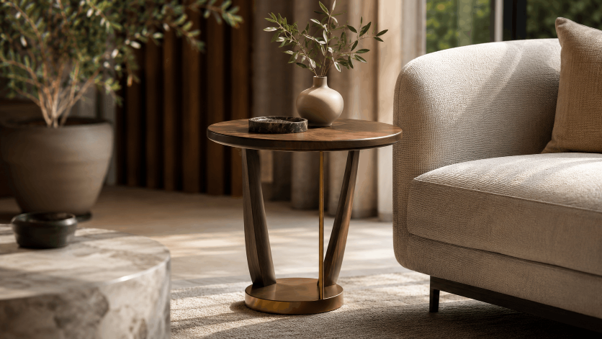
This guide walks you through all four, honestly. Then it shows you how to spot a side table that will still look good in ten years, and what to check before you click buy.
The Four Places You Can Buy A Modern Side Table
1. High street and volume retailers
These are the big names most people think of first. They stock a wide range, prices are low, and many will get a table to your door in a day or two.
The trade-off is that most of these tables are made from chipboard or MDF with a printed wood effect on top. That is fine for a spare room or a first flat. It is less good if the table will get daily use, because the edges chip and the surface can bubble if it gets wet.
2. Online marketplaces
Marketplaces list thousands of side tables from hundreds of different sellers. If you want choice, you will find it here.
The catch is that you are not really buying from one shop. You are buying from a seller you have never heard of, through a website. Quality swings wildly between listings, photos are often the same stock images reused across many sellers, and getting help after delivery can be slow.
3. Designer furniture specialists
This is where you go when you want a side table that is genuinely well made. Specialists stock a smaller number of pieces, usually from established European makers, and they know each one properly.
Prices start higher, often from around £700 and climbing past £2,000 for larger designs. But you are paying for solid timber rather than board, real stone or ceramic rather than a printed finish, and joinery that will not loosen after a year. A good specialist will also tell you when a piece is not right for your room, which is worth a lot.
4. Vintage and second-hand dealers
Mid-century and 1970s side tables have a real following, and for good reason. Older pieces were often built from solid wood.
Just go in with your eyes open. You are buying as seen, sizes are rarely standard, and you will not get a warranty or a returns window. Check the joints and the veneer edges before you commit.
How To Tell A Good Side Table From A Cheap One
Most guides skip this part, which is a shame, because it is the bit that saves you money. Here is what to actually look at.
Pick it up, or check the weight in the specs
Solid oak or walnut is heavy. A table that weighs almost nothing is usually board with a thin skin over it.
Look at the edges
On a solid timber top, the grain runs over the edge and continues down the side. On a printed board top, the grain stops dead and a separate strip has been glued on. Once you have seen it, you cannot unsee it.
Check how the legs meet the top
Screwed into a metal plate is fine for light use. Jointed into the frame, or welded if it is a steel base, is what lasts.
Ask what the finish is?
An oiled or hard-wax finish soaks into the wood, so small scratches can be buffed out at home. A thick lacquer sits on top and chips.
On stone and ceramic tops, ask if it is sealed.
Unsealed marble stains from a single glass of red wine. Sealed stone, or a ceramic top, shrugs it off.
Get these five things right and your table will stand the test of time. Get them wrong and you will be shopping again in three years.
Getting The Size Right
This is where most people slip up, and it has nothing to do with money.
Height matters more than anything.
The rule of thumb is simple: your side table should sit level with the arm of your sofa or chair, or up to about 5cm below it. Most UK sofa arms sit between 55cm and 65cm high, so most side tables land in that range too. If you cannot find an exact match, go slightly lower. Reaching down is comfortable. Reaching up is not.
Keep the footprint smaller than the seat next to it.
A side table should tuck in beside your sofa, not compete with it.
Round or square?
Round tables work better in busy rooms and small spaces, because there are no corners to catch your shin. Square and rectangular tables give you more usable surface and sit flush against a wall or into a corner.
For a bedside table, aim for a top that is roughly level with the top of your mattress.
Choosing A Style And Material
Once the size is settled, the fun part starts.
-
Solid wood suits almost everything. Oak is light and warm, walnut is darker and richer. Wood is the safest choice if the rest of your room already has a lot going on. Italian maker Porada is a good example of this approach, and its side tables show off timber joinery rather than hiding it.
-
Glass and metal keeps a room feeling open, because you can see straight through the table. This is a smart move in a small living room where a solid block of wood would feel heavy. Cattelan Italia does a lot of work in this space, with slim sculptural bases and floating glass tops.
-
Ceramic and stone gives you that cool, hard-wearing surface that looks expensive because it is. Ceramic in particular handles hot mugs and spills without complaint.
-
Lacquered and mixed finishes let you add colour without repainting a wall. Bontempi Casa leans into this, mixing metal frames with lacquer and wood.
If you are furnishing a whole room rather than filling one gap, it is worth browsing living room furniture as a set, so your side table, coffee table and sideboard speak the same language.
Buying A Side Table For Outside
If your side table is going in a garden, on a terrace or under a pergola, indoor rules do not apply.
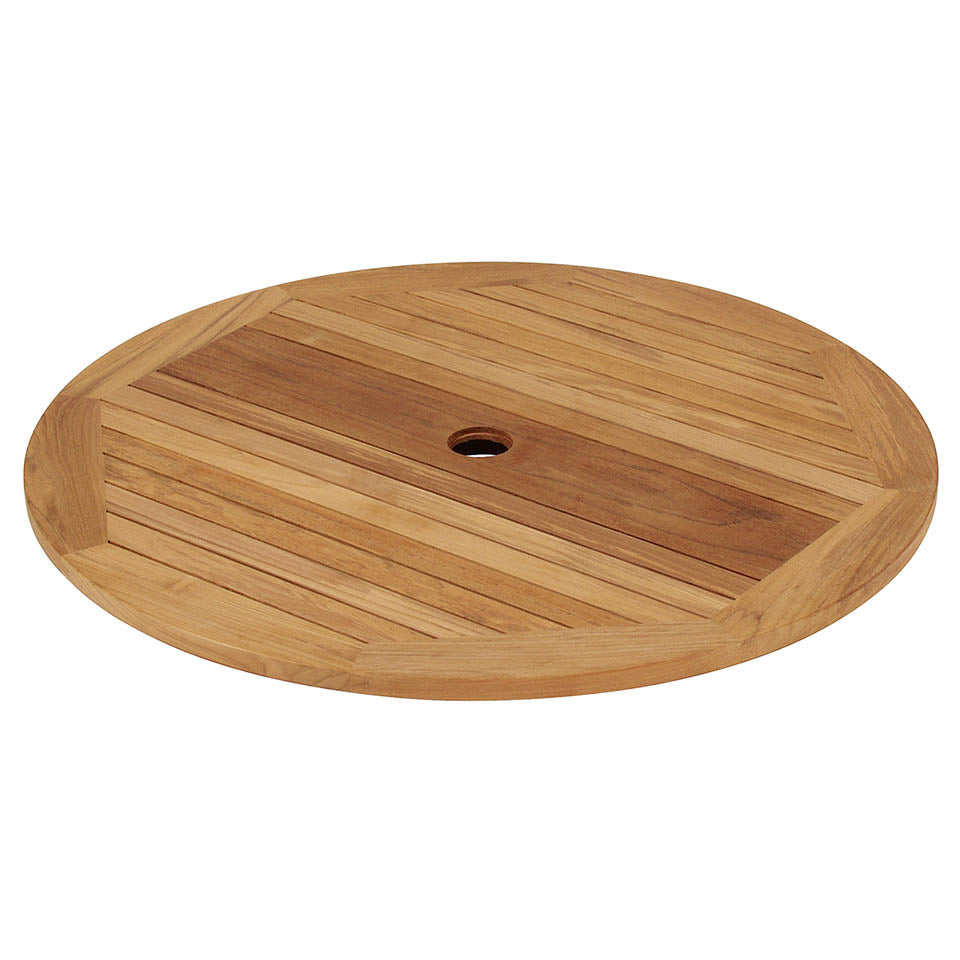
Outdoor side tables need to handle rain, frost and UV without warping or fading. Look for powder-coated aluminium, teak, or all-weather composite tops. Avoid anything with a chipboard core, and avoid untreated steel unless you like rust.
Weight matters here too, but in reverse. A very light table will blow over in a British spring. A little heft is your friend.
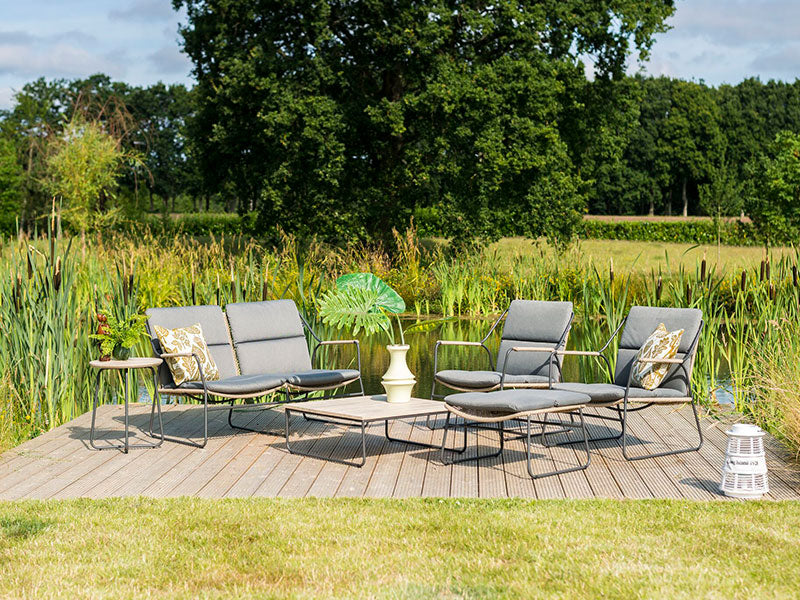
4 Seasons Outdoor is a sensible place to start looking, since its side and coffee tables are built for exactly this and sit at friendlier prices than the indoor designer brands. You can also browse the wider outdoor furniture range if you are pulling a whole seating area together.
What To Check Before You Order
A few practical things that catch UK buyers out.
Is it in stock or made to order?
This is the big one. In-stock outdoor pieces often ship within days. Made-to-order Italian designs are typically built after you order, so a six to eight week lead time is normal. Neither is a problem if you know about it in advance. It is only a problem if you were expecting the table before your dinner party on Saturday.
Check the delivery terms.
Many UK retailers offer free mainland delivery above a spend threshold. Deliveries to Northern Ireland, the Scottish islands and the Isle of Man usually need a separate quote. Have a look at the delivery details before you order.
Measure your route, not just your room.
Side tables are small, so this rarely bites. But if you are buying a set with a coffee table, check your doorways and stairs.
Know the returns window.
Most UK retailers give you 14 days from delivery, with the item unused and in its original packaging. Made-to-order pieces are sometimes excluded, so ask.
See it in person if you can.
Photos flatten everything. Colour, grain and weight are all things you can only really judge in a room. If you are anywhere near Essex, The Modern Furniture Company's showroom is a stone's throw from junction 29 of the M25, and directions are here. Sitting on the sofa and reaching for the table beside it tells you more in ten seconds than an hour of scrolling.
A Few Side Tables Worth A Look
If you want somewhere concrete to start, these cover the main options:

Porada Cucu Side Table - small, round and solid wood. A good first designer piece, and the gentlest entry point on price.

Porada Antigone Side Table - available in two heights, so you can match your sofa arm properly instead of settling.

Porada Joint Side Table - a sculptural round design that works as a statement piece next to a plain sofa.
Cattelan Italia Pat - glass and metal, in triangular or oval shapes. Ideal for small rooms where you want the light to pass through.
4 Seasons Outdoor Verdi Side Table - a simple, weatherproof 45cm table for a garden lounge set.
You can browse the full side and coffee table collection to compare heights and finishes side by side, or the wider indoor side and coffee tables range if you want to see every brand together.
FAQs
How much should I spend on a modern side table?
Under £200 gets you a board-built table that will do a job for a few years. Between £700 and £1,500 gets you solid timber or real stone from an established maker. Above £1,500 you are buying design as much as furniture, usually from an Italian or Scandinavian house.
What height should a side table be?
Level with your sofa arm, or up to 5cm below it. For most UK sofas that means somewhere between 50cm and 65cm.
What is the difference between a side table, an end table and a lamp table?
Very little, honestly. The names overlap. In practice, end tables sit at the ends of a sofa, lamp tables are a bit taller and narrower because they are made to hold a light, and side table is the catch-all term for all of them.
Can I use two side tables instead of a coffee table?
Yes, and in a small room it often works better. Two small tables can be moved apart when you need floor space, and pushed together when you are entertaining. Nesting tables do the same job.
Do designer side tables arrive assembled?
Usually yes, or close to it. Higher-end pieces tend to arrive built or needing only the legs attached. Flat-pack assembly is much more common at the budget end.