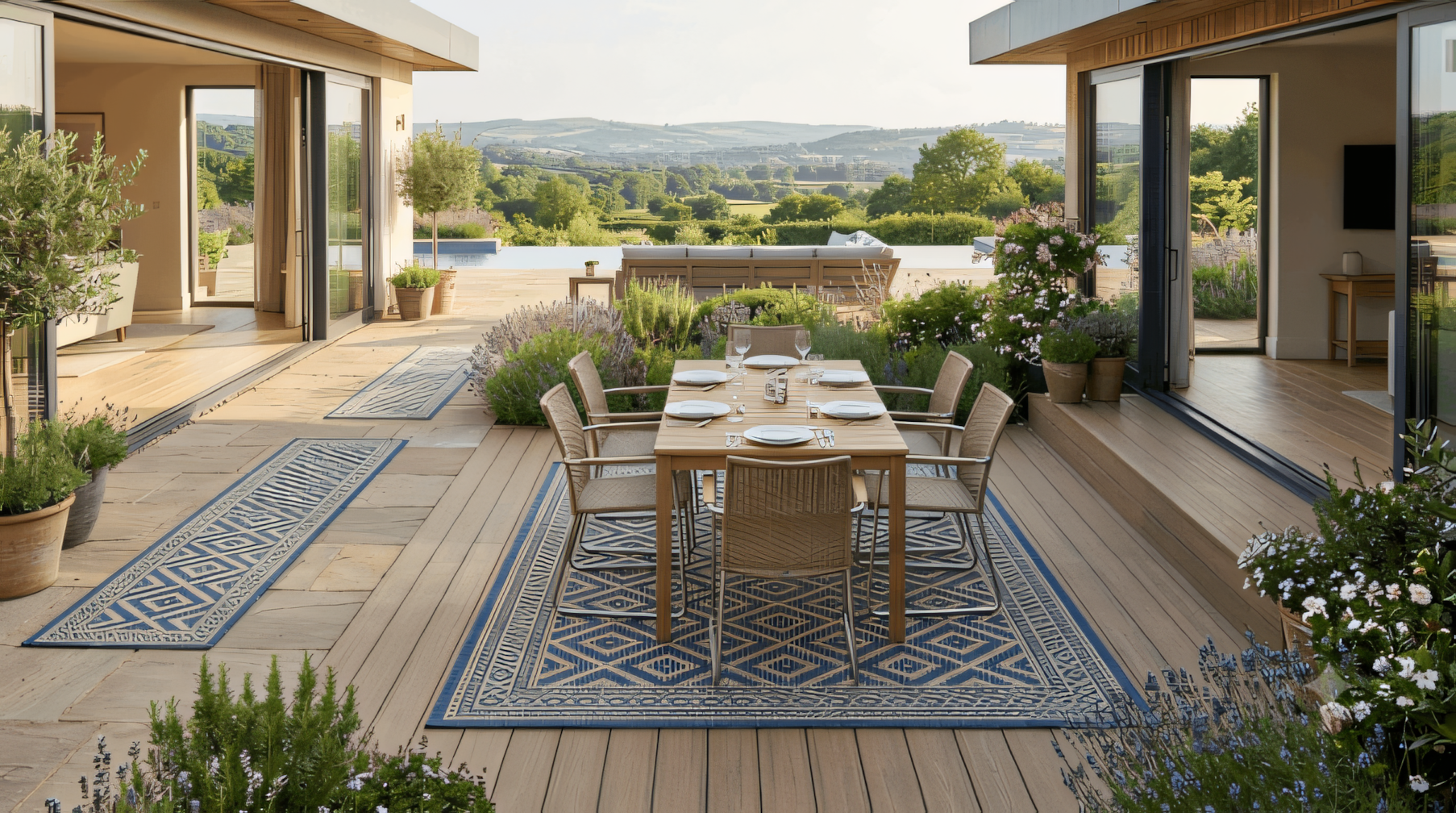
That's the one-line version. The rest of this guide is the reasoning behind it, plus specific rugs worth shortlisting if you're furnishing a patio, terrace, or the deck around a pool.
What "High-Traffic Ready" Actually Means Outdoors
Indoors, high traffic usually means feet. Outdoors, it means feet plus rain, UV exposure, spilled drinks, dragged chairs, and whatever the dog tracked in from the lawn. A rug rated for a busy hallway isn't automatically rated for a busy patio, the two environments stress a rug in completely different ways.
For an outdoor rug to hold up, it needs to tick four boxes at once:
-
Weather-resistant fibres that won't rot, mildew, or soak up water like a sponge
-
UV-stabilised colour that won't bleach out after one summer in direct sun
-
A weave tight enough to resist crushing under repeated footfall and dragged furniture
-
Fast drying time, since a rug that stays damp after rain becomes a mould risk within days
Miss any one of those and you'll be replacing the rug sooner than expected, which is really the whole point of choosing correctly the first time rather than shopping again next year.
The Best Materials For Heavy Outdoor Use
Not every material marketed as "outdoor" is built for constant footfall. Here's how the main options actually perform.
Solution-dyed polypropylene is the standout for busy outdoor areas. The colour is baked into the fibre rather than applied as a surface dye, so fading, staining, and mildew are all far less of an issue than with cheaper printed alternatives. It's also the material behind most of the durable, design-led rugs in this space, including pieces like the Manutti Solae Rectangular Outdoor Rug, which uses a tightly woven construction specifically to handle repeated use around dining and lounge zones.
Polyethylene rope weave is the second strong option, and it's what gives rugs like Jardinico's range their texture and weight. Rope-woven rugs are heavier underfoot, which helps them stay put in windier spots, and the thick, rounded fibres resist flattening better than a flat synthetic weave.
Natural fibres (jute, sisal, wool) are worth avoiding for a genuinely high-traffic outdoor spot. They're beautiful, but they absorb moisture, which means mildew risk, slower drying, and fibres that break down faster under constant footfall. Save these for a sheltered, low-use corner rather than the main dining terrace.
Standard printed polyester sits at the bottom of the list here. It looks the part in a photo but the surface-level colour fades quickly in direct sun, and the weave is usually too loose to take heavy daily use.
Weave And Pile Height: The Detail Most Guides Skip
Material gets most of the attention, but weave and pile matter just as much, arguably more, for how a rug performs under heavy footfall.
A low-pile, flatwoven rug is the right call for any zone that sees constant movement. There's no loft to crush, nothing for grit to bury itself into, and a flat surface sheds water and dries far faster than anything with texture or loop pile. It's also easier to sweep or hose down, which matters more than it sounds once summer entertaining season is in full swing.
Higher-pile or heavily textured outdoor rugs still have a place, just not under the dining table or along the main path from the house to the seating area. Reserve those for a sun lounger zone that sees lighter, barefoot use rather than constant chair-dragging and foot traffic. If you're comparing options side by side, it's worth browsing the full range of outdoor rugs to see how pile height and weave vary between brands before deciding.
Best Outdoor Rugs To Shortlist For A Busy Patio
A few specific pieces are worth putting on the list if durability is the priority:
4 Seasons Outdoor Rugs (from £140) is the most accessible entry point here, a flatwoven, low-pile design that's built for exactly the kind of daily use a family patio sees, without the price tag of the design-led alternatives.
Jardinico Rugs | Wilson (from £985) uses the rope-weave construction mentioned above, giving it real weight and resilience underfoot, a strong option for a dining terrace that gets heavy use through the warmer months.
Manutti Solae Rectangular Outdoor Rug (from £2,066) sits at the premium end and is purpose-built for demanding outdoor environments, tightly woven, fade-resistant, and substantial enough to anchor a large seating or dining layout.
Gloster 140cm Round Rug (£950) is worth a look if the high-traffic zone in question is circular, around a fire pit or a round dining table, where a rectangular rug would leave awkward gaps at the edges.
Where The Heavy Footfall Actually Happens
Before buying, it helps to map out where the real traffic is, because "high traffic" rarely means the whole patio.
The space directly under and around a dining table takes the most punishment, chairs scraping back and forth, plates carried across it, spills. This is the zone to prioritise durability for, and it's worth checking the outdoor dining range if the table and rug are being chosen together, since sizing them as a set avoids a rug that's either swallowed by the furniture or too small to matter.
The walkway between the house and the seating area is the second hotspot, constant footfall, often in wet shoes after rain. A flatweave rug here does double duty as a practical transition surface as well as a design feature.
Lounge zones around sofas or daybeds see lighter, more occasional use by comparison, people tend to sit rather than walk through repeatedly, so there's more flexibility on pile height here. If lounge seating is the focus, the outdoor lounge seating range is worth pairing with a slightly softer-textured rug than the dining zone would need.
Sizing A Rug For A High-Traffic Zone
Undersizing is the most common mistake in a busy outdoor space. A rug that only just covers the table leaves chair legs constantly stepping on and off the edge, which accelerates fraying at exactly the point where the rug takes the most stress.
As a working guide:
-
Dining zones: allow at least 60-70cm of rug beyond the table on all sides, enough for chairs to stay fully on the rug even when pulled out
-
Walkways: a runner or rectangular rug should be wide enough that a normal stride doesn't clip the edge
-
Lounge areas: size to the full seating group rather than a single sofa, so foot traffic between pieces stays on the rug rather than the bare deck or paving
If the space sits under a covered structure, worth checking the garden pergolas range too, a covered zone shifts the calculation slightly, since a rug there gets less rain exposure but often more constant, year-round footfall.
Keeping A High-Traffic Rug Looking Its Best
Even the most durable outdoor rug needs a bit of upkeep to actually earn its keep over several summers.
-
Shake out or sweep loose debris weekly during peak use, this is what actually prevents grit from working its way into the weave and causing wear
-
Hose down flatweave rugs directly, most solution-dyed polypropylene and rope-weave designs are built to handle this without damage
-
Let the rug dry fully before covering furniture back over it, trapping moisture underneath is the fastest way to encourage mildew
-
Rotate the rug occasionally if one section (usually under the table) is taking noticeably more wear than the rest
A well-chosen rug in the right material should handle several seasons of daily use without needing to be replaced, which is really the return on investment that matters here.
Final Thoughts
The rug that survives a high-traffic patio isn't necessarily the one that looks best on a shelf, it's the one built with the right fibre and weave for constant footfall, sun, and rain. A flatwoven, solution-dyed polypropylene or rope-weave rug will consistently outlast natural fibres in the spots that see the most use, and sizing it generously around the furniture protects the edges from the fraying that undersized rugs suffer first. Start with the zone that gets hit hardest, usually the dining table or the main walkway, and build the rest of the layout around it.